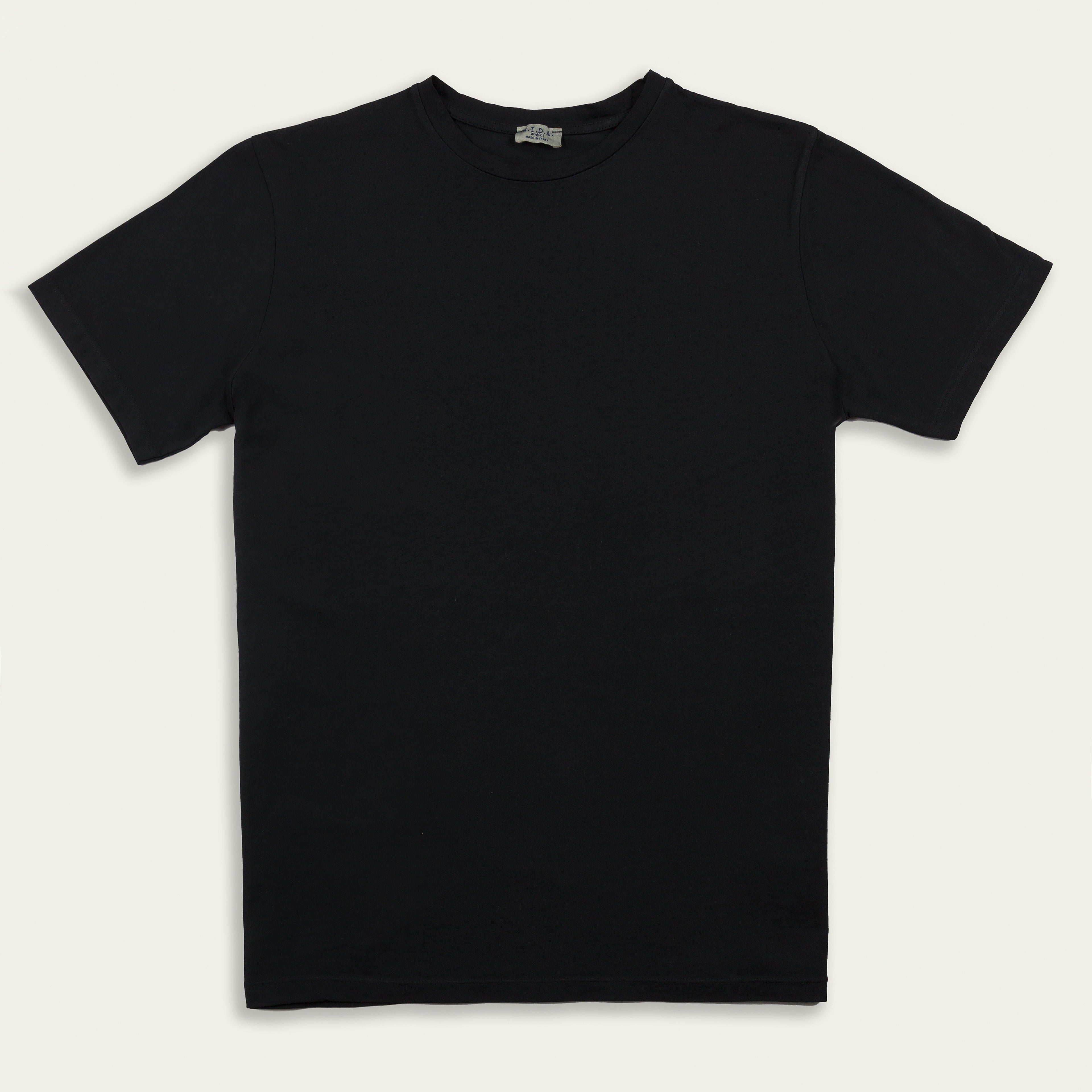
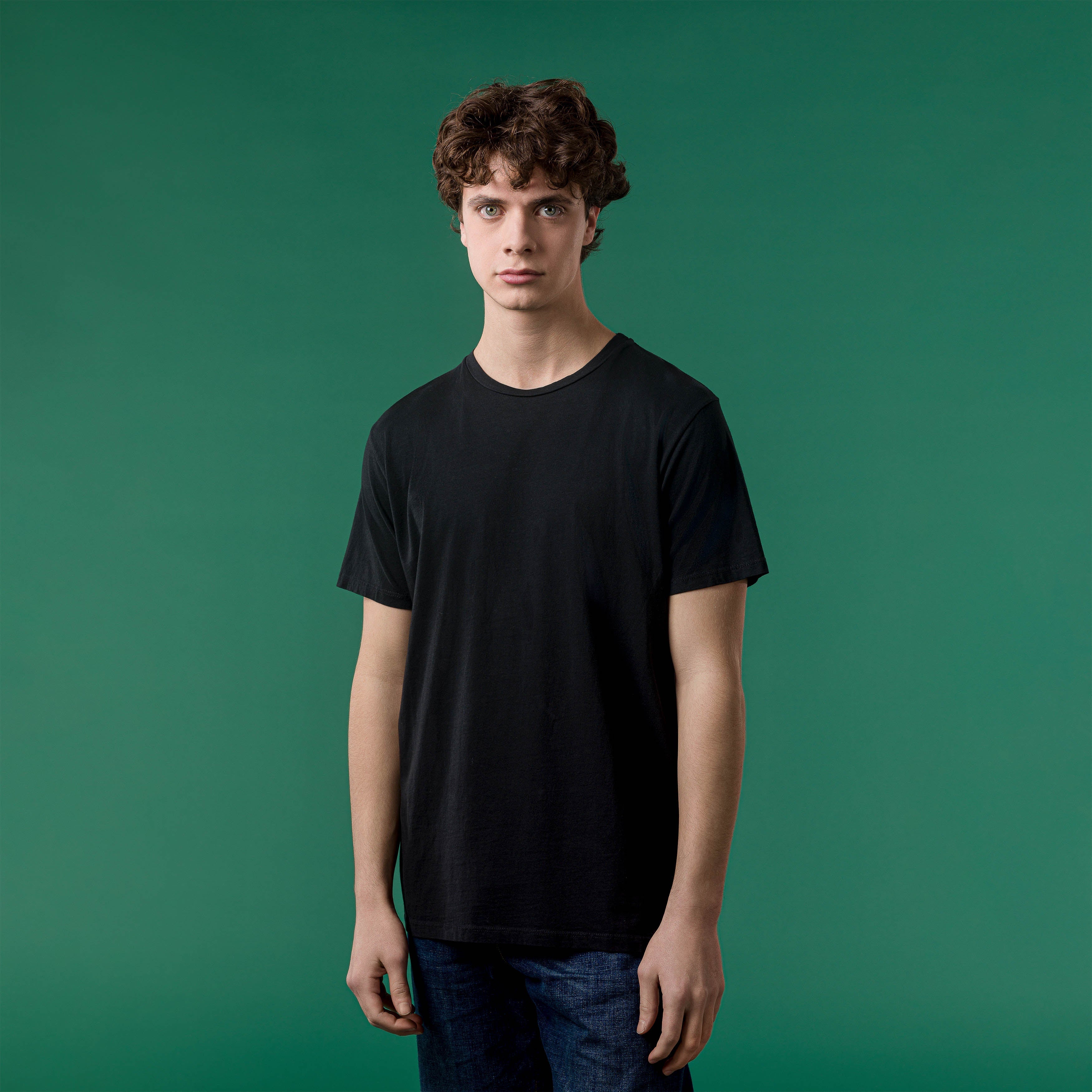


A t-shirt is simple. Making a good one isn’t.
A t-shirt may be one of the simplest garments in a wardrobe, but making one properly requires experience, precision and patience.
At MIDAundici, every piece is cut, sewn, dyed and finished in Tuscany, working in small batches with a handful of specialists who have spent decades in the textile industry.We focus on what matters: fabric, construction and colour, because when something is worn almost every day, it should be made properly.
Made in Tuscany
The region around Florence has been a centre for textile production and garment finishing for centuries. This is where MIDAundici is made.
Between 5 to 10 people are directly involved in production, working alongside long-term local partners. Most have been in the industry their entire lives, often continuing knowledge passed down through generations. We design and control quality in-house, staying closely involved in every step. Production is deliberately kept small, typically 50 to 150 pieces per colour, allowing us to refine details and maintain consistency.

Fabric first
Every good t-shirt starts with the fabric. Our cotton is sourced from Egypt and the USA, then spun into yarn in Turkey using combed cotton for a smoother, more refined finish. We select fabrics for their balance of softness, durability and comfort; never too heavy, never overly delicate.
Before production begins, each fabric is tested and washed to understand how it behaves. Because fabric never reacts the same way twice.
Built properly
A well-made t-shirt should hold its shape over time. For that reason we never use tubular construction, a shortcut common in mass production. Every garment is cut with side seams, giving it better structure and a more stable fit.
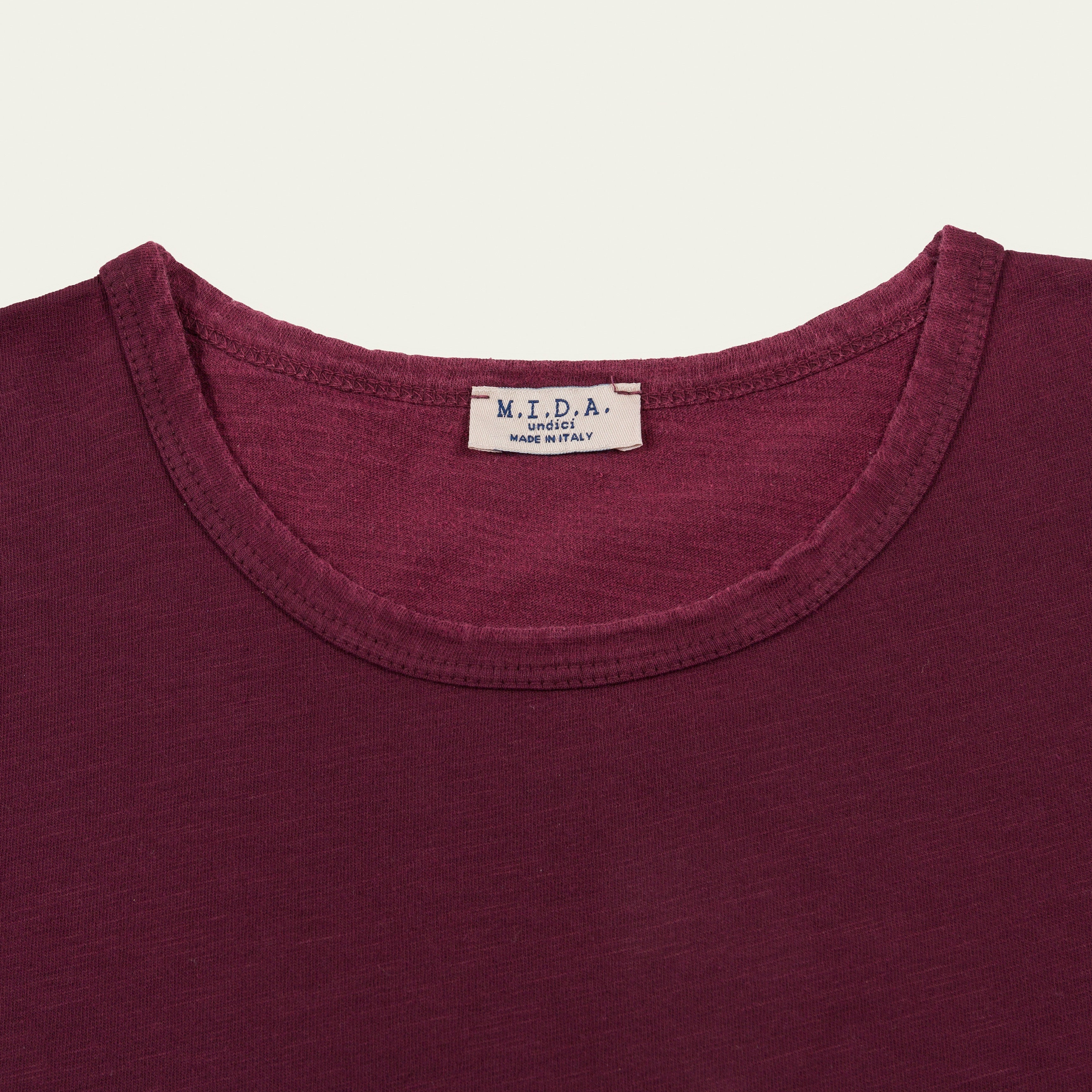
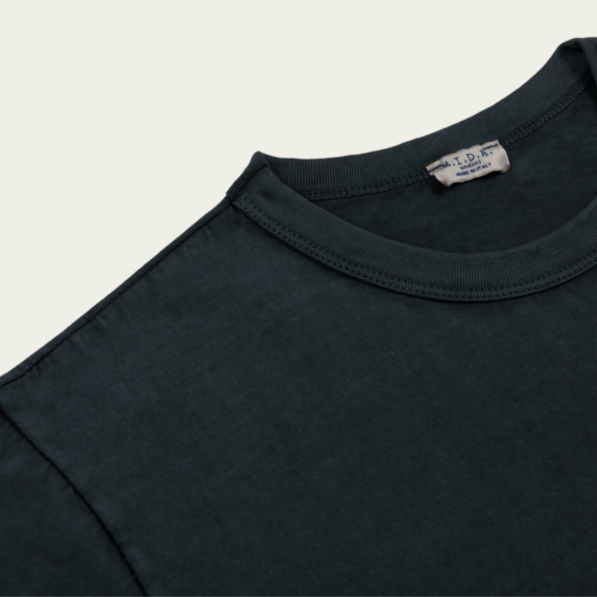
Collars are built with the same care. We use different constructions depending on the model, but we avoid the low-quality elastic ribs that quickly lose their shape.
These details are not visible at first glance but they define how the garment ages.
The art of colour
Dyeing and finishing is where MIDAundici adds its deepest expertise.
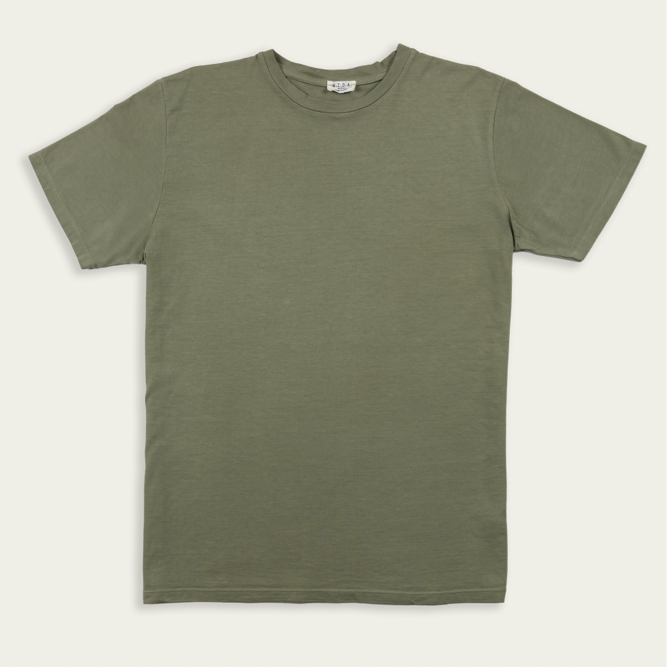
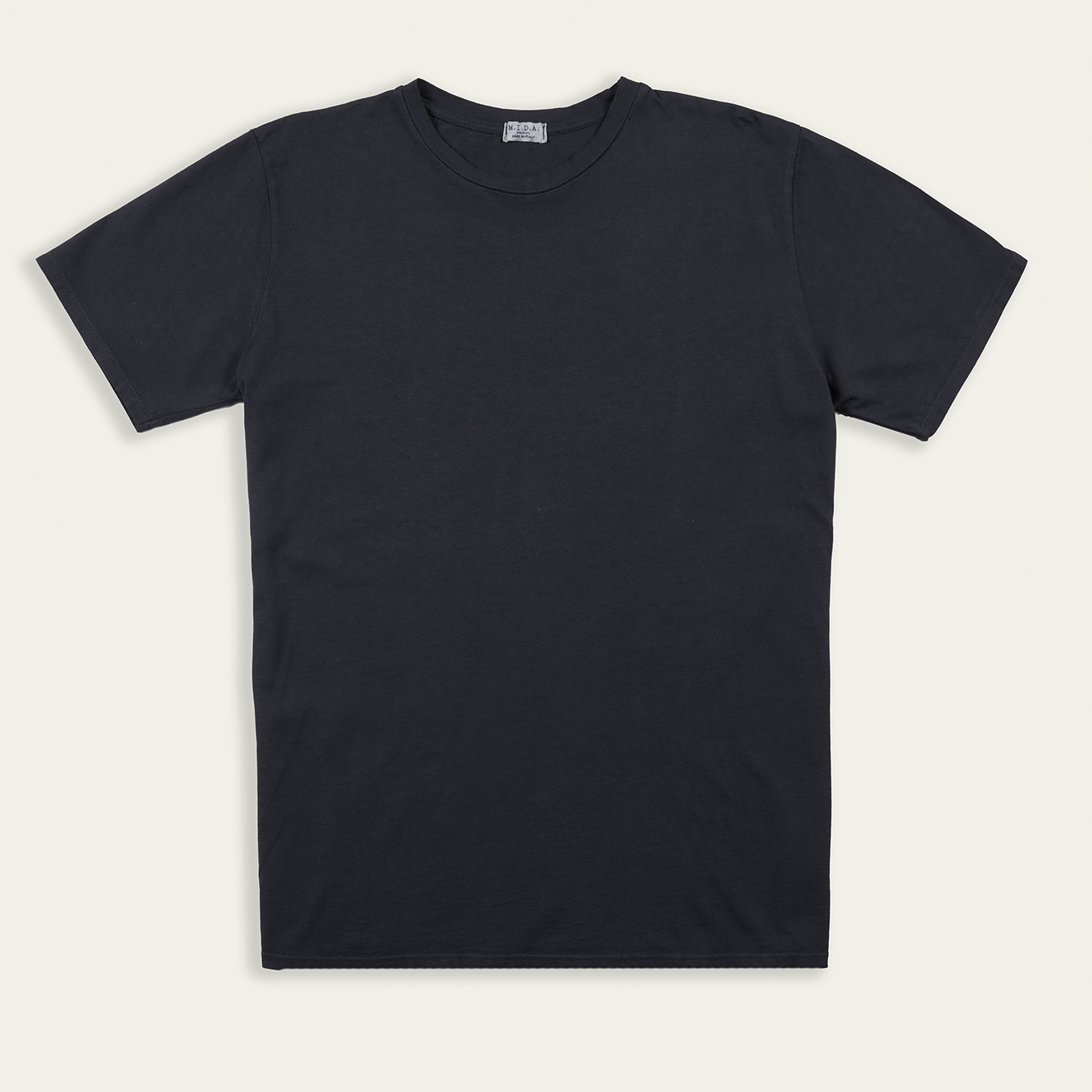
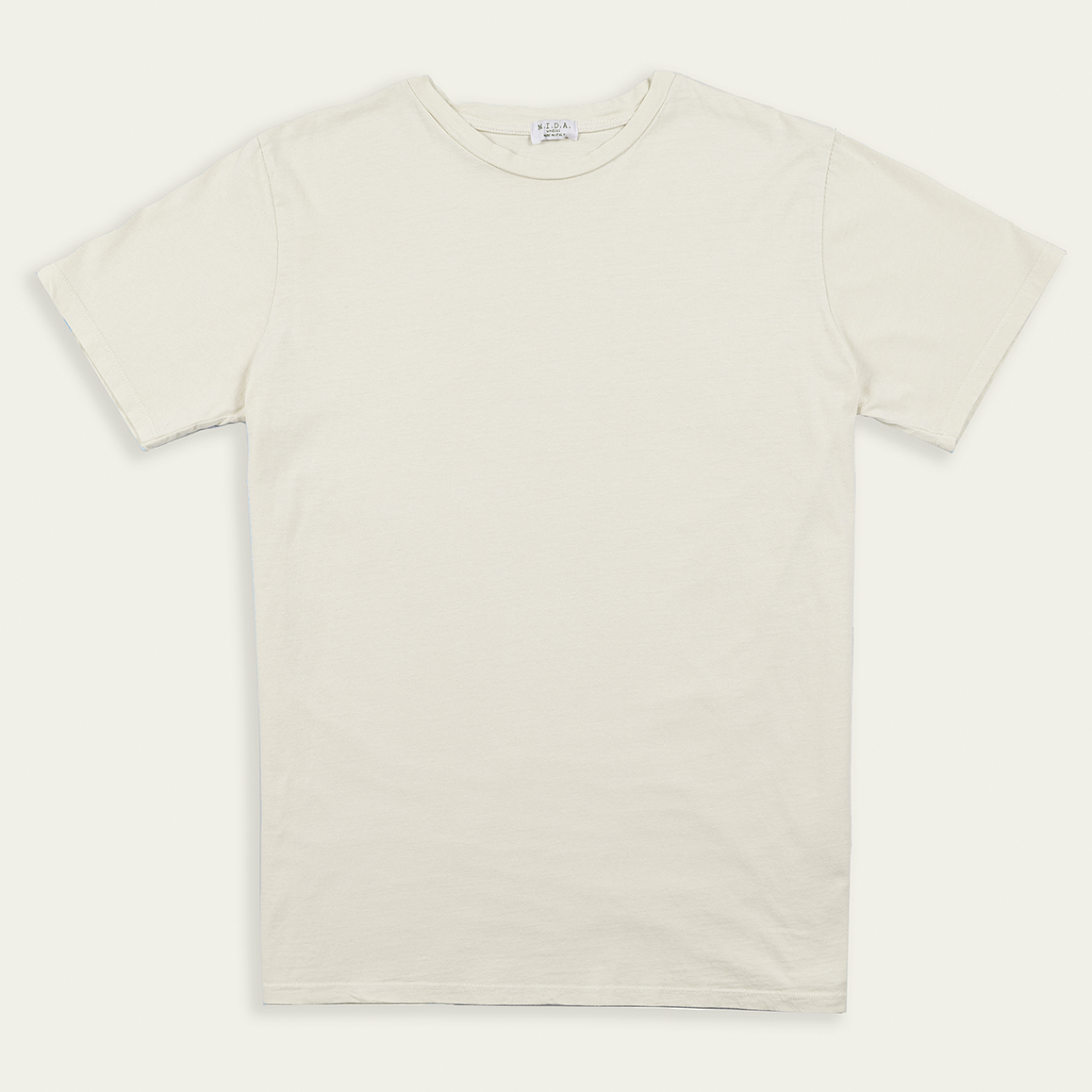
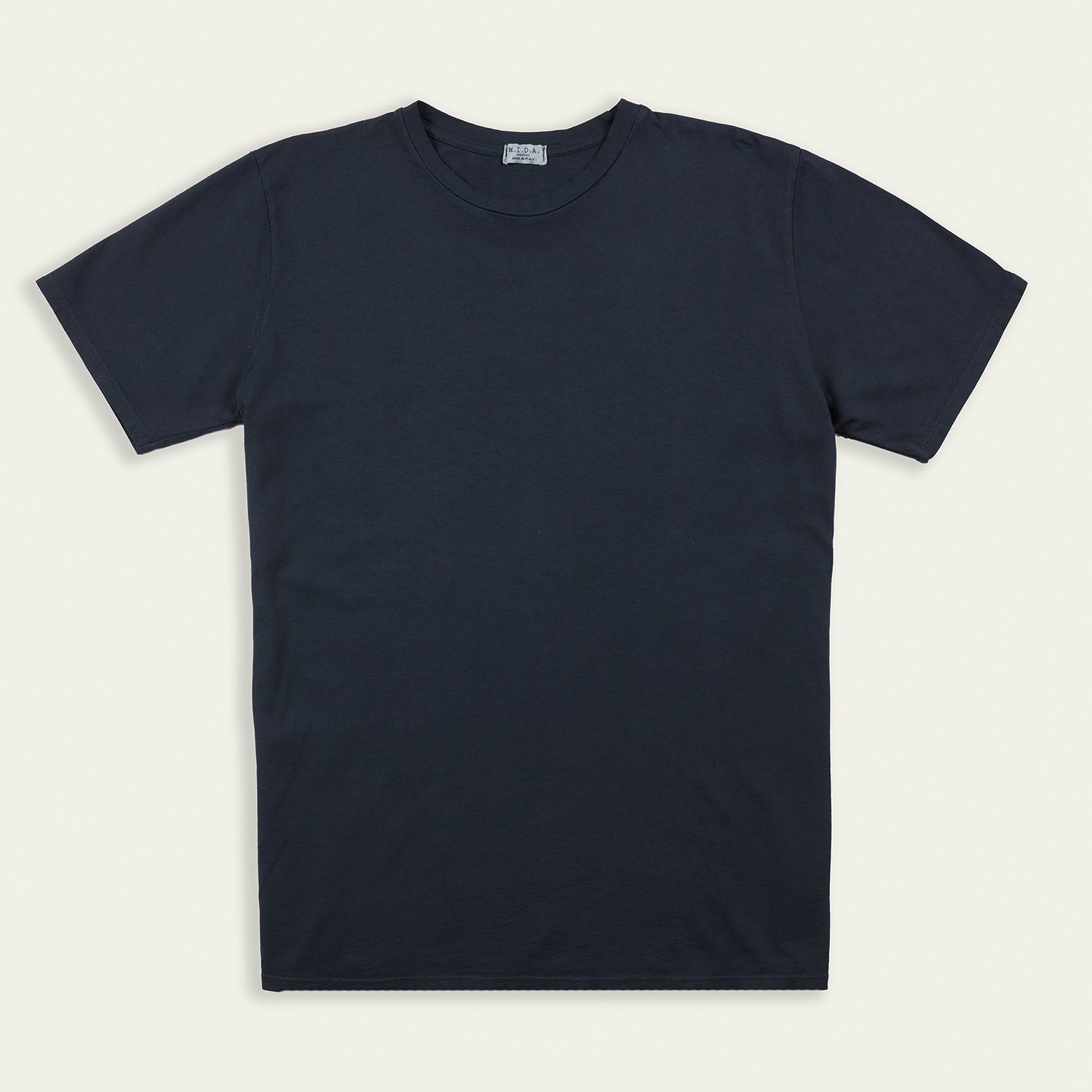
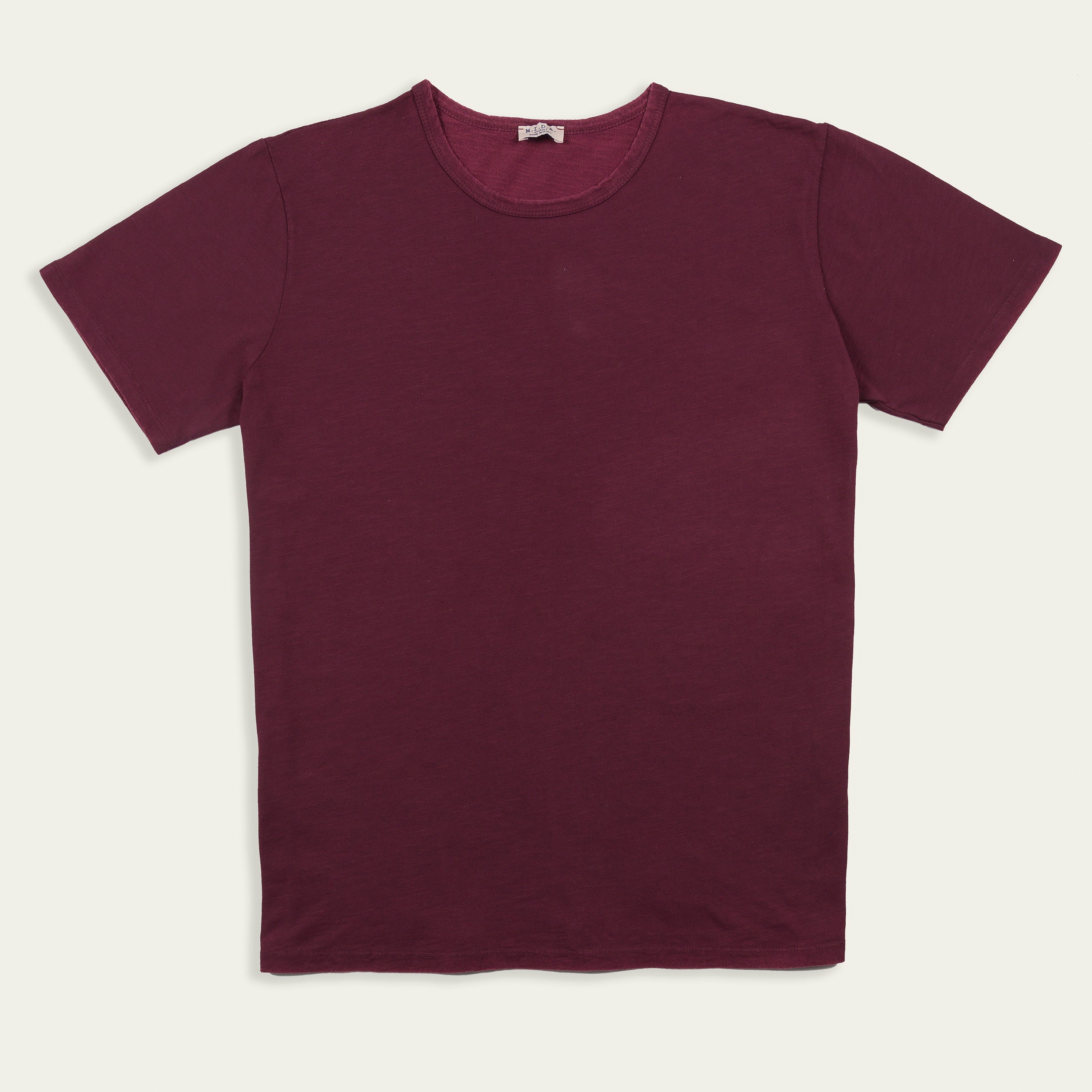
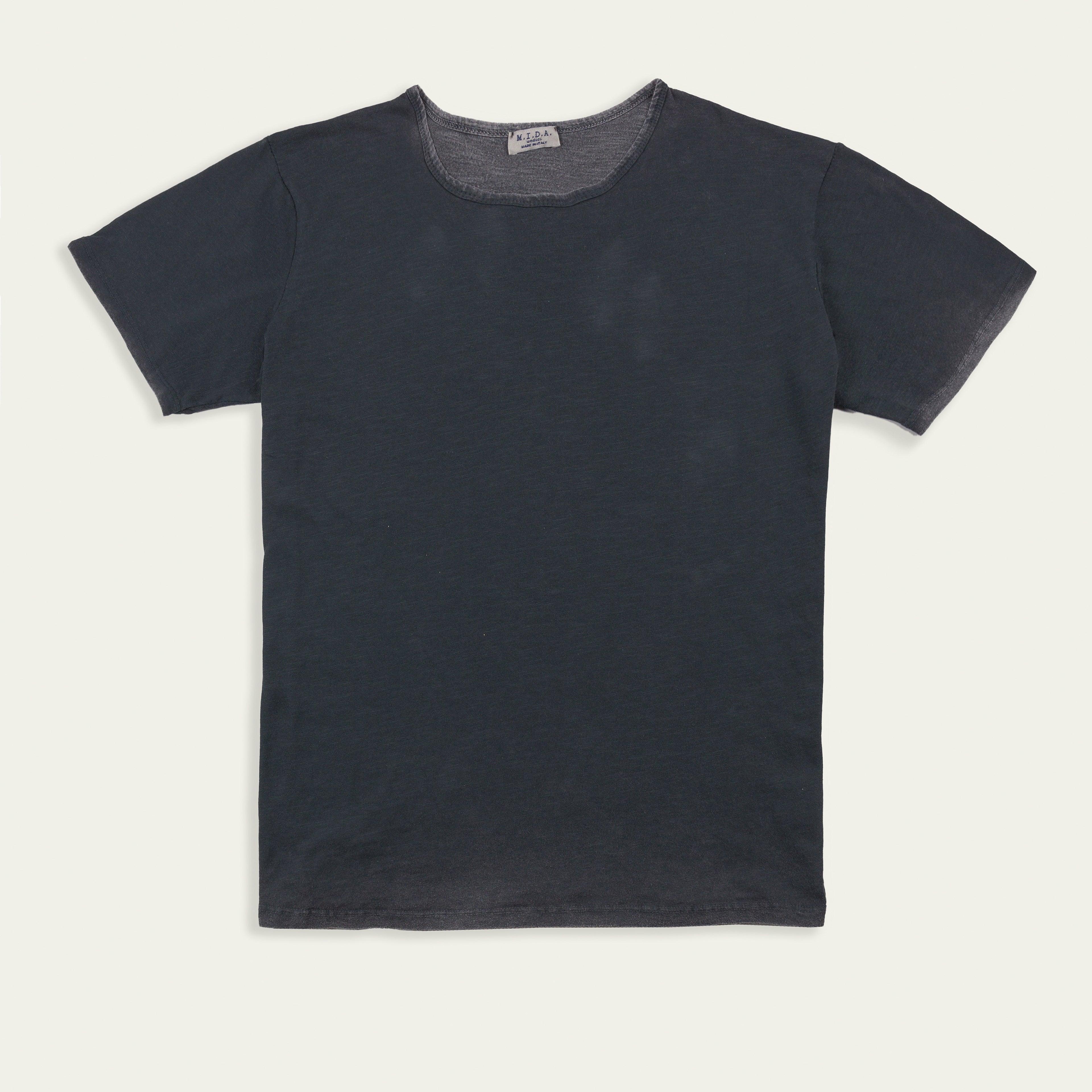
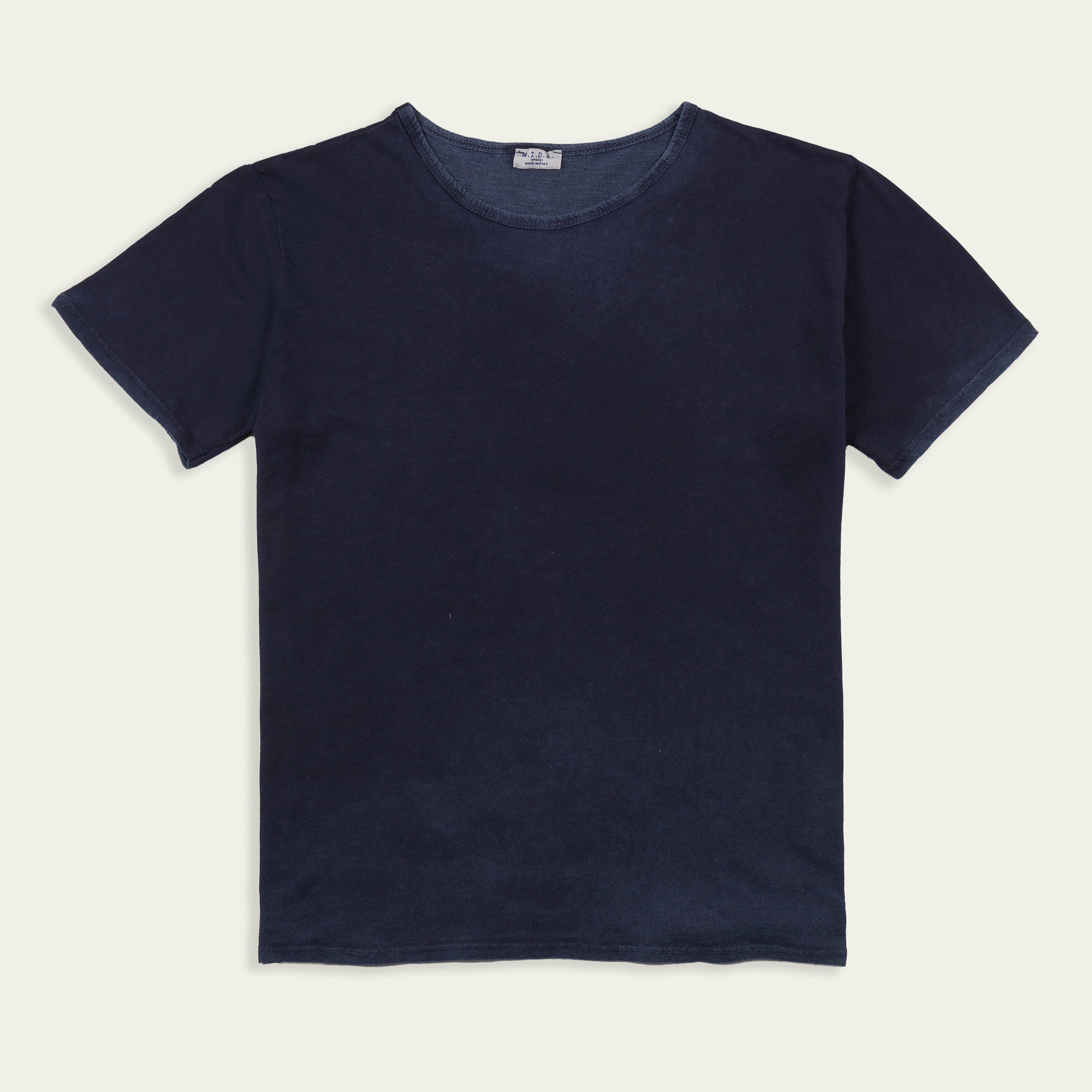
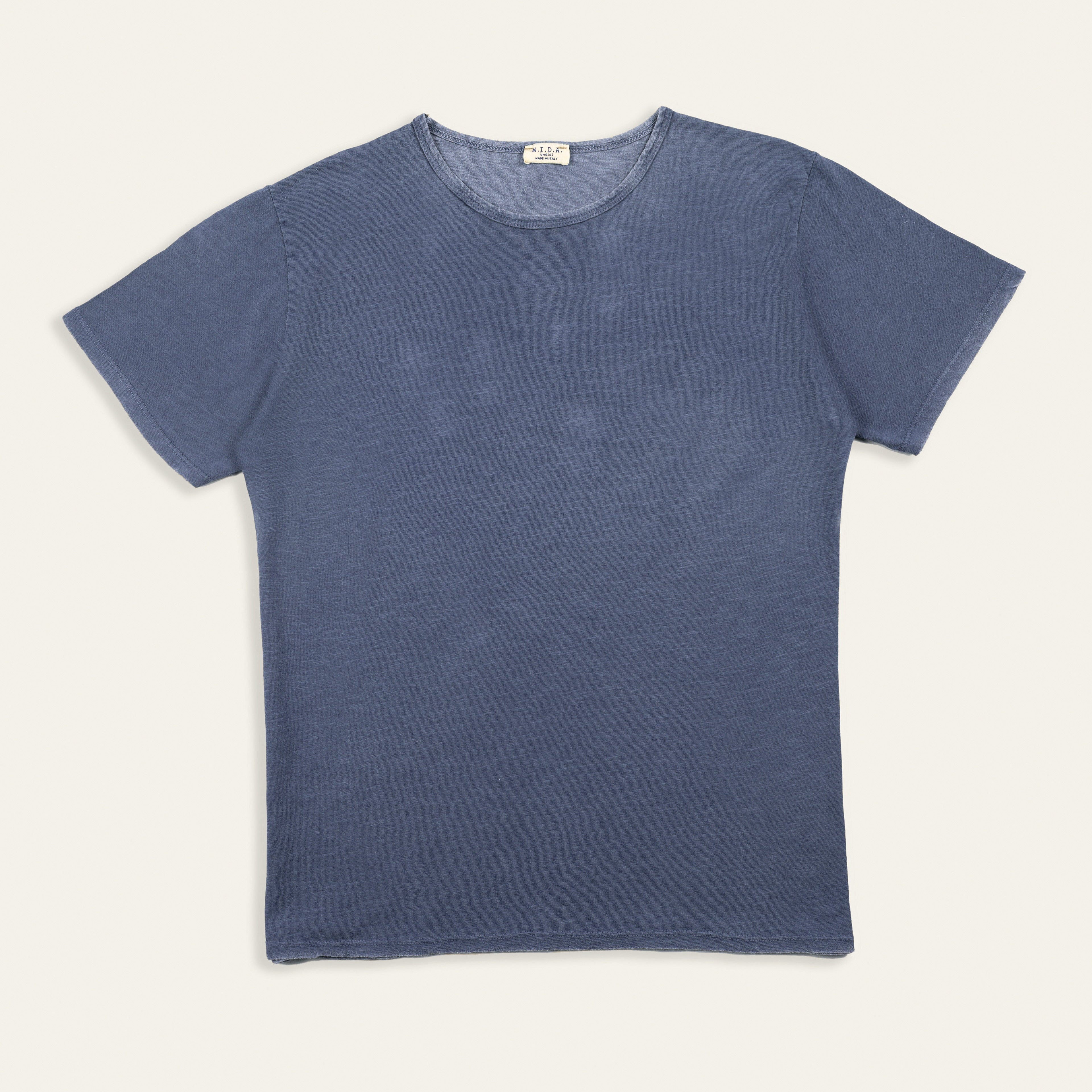
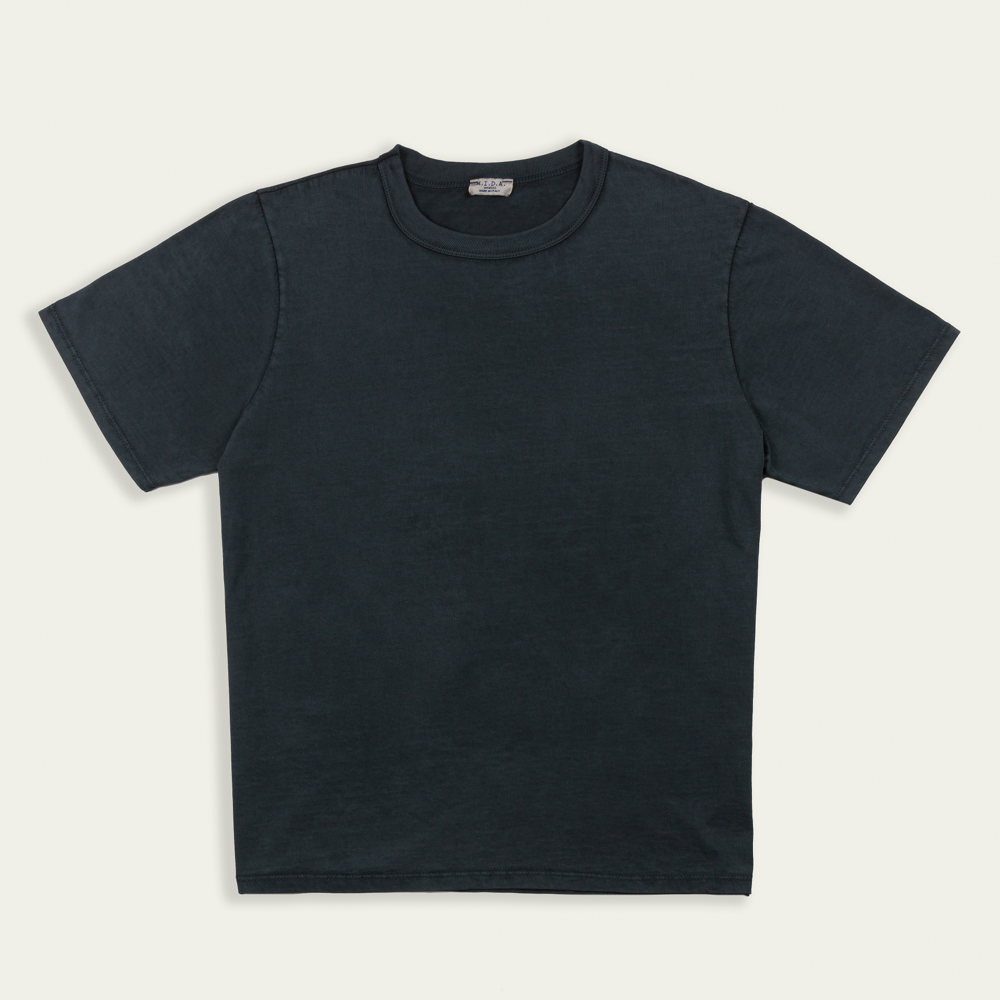
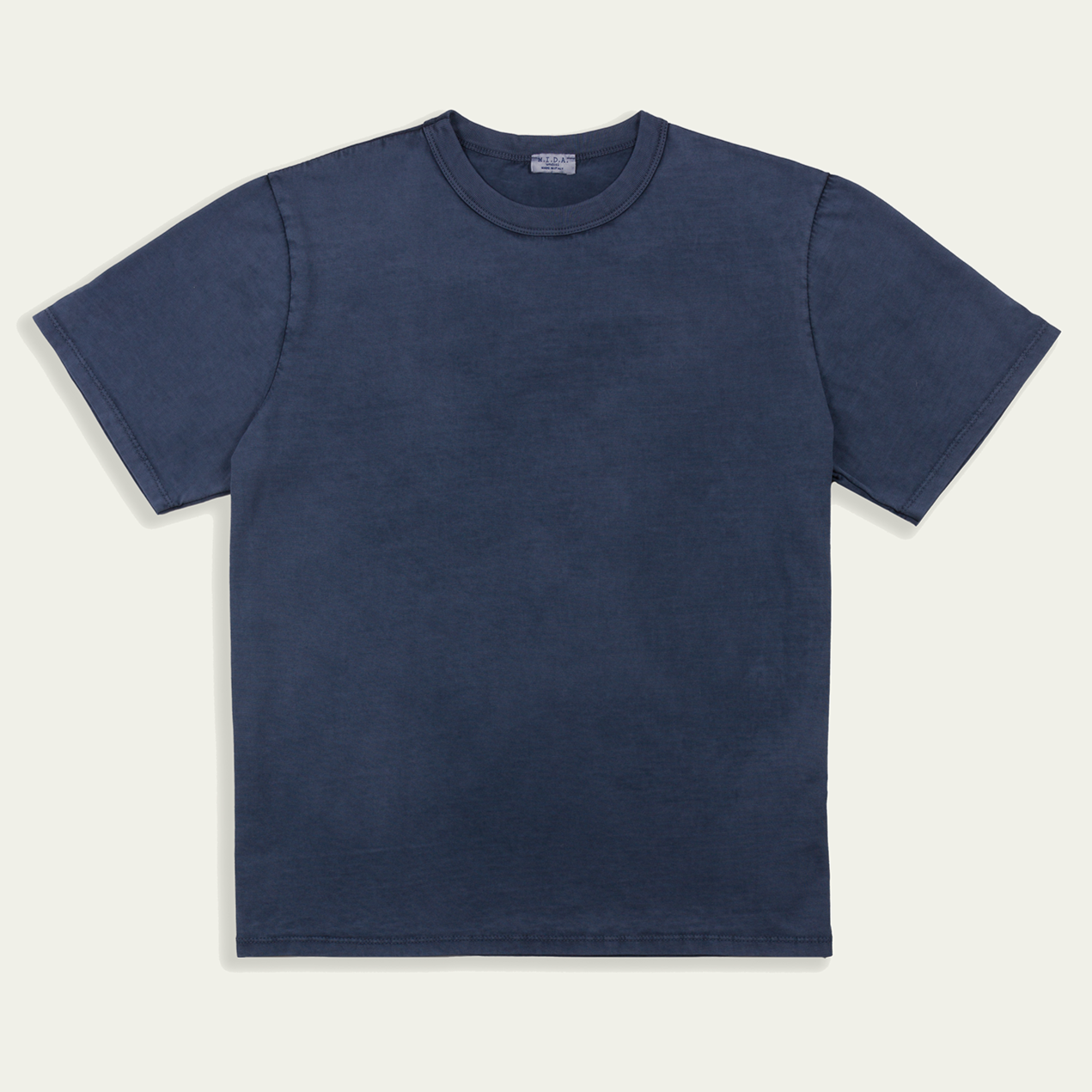
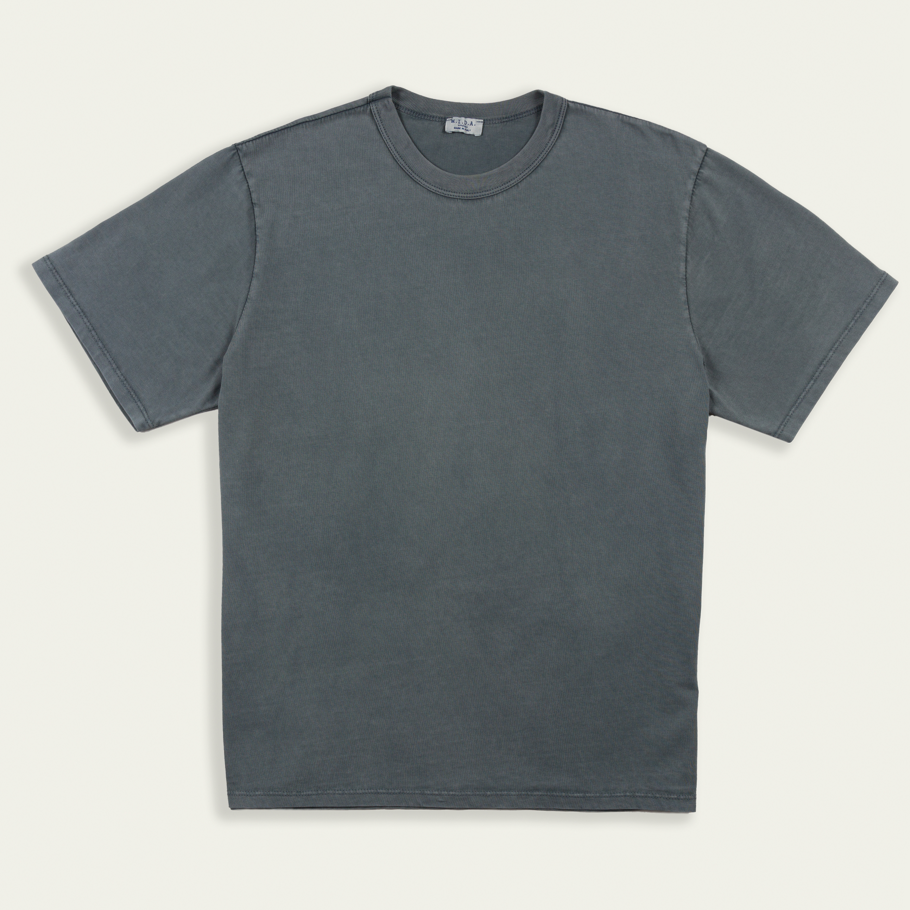
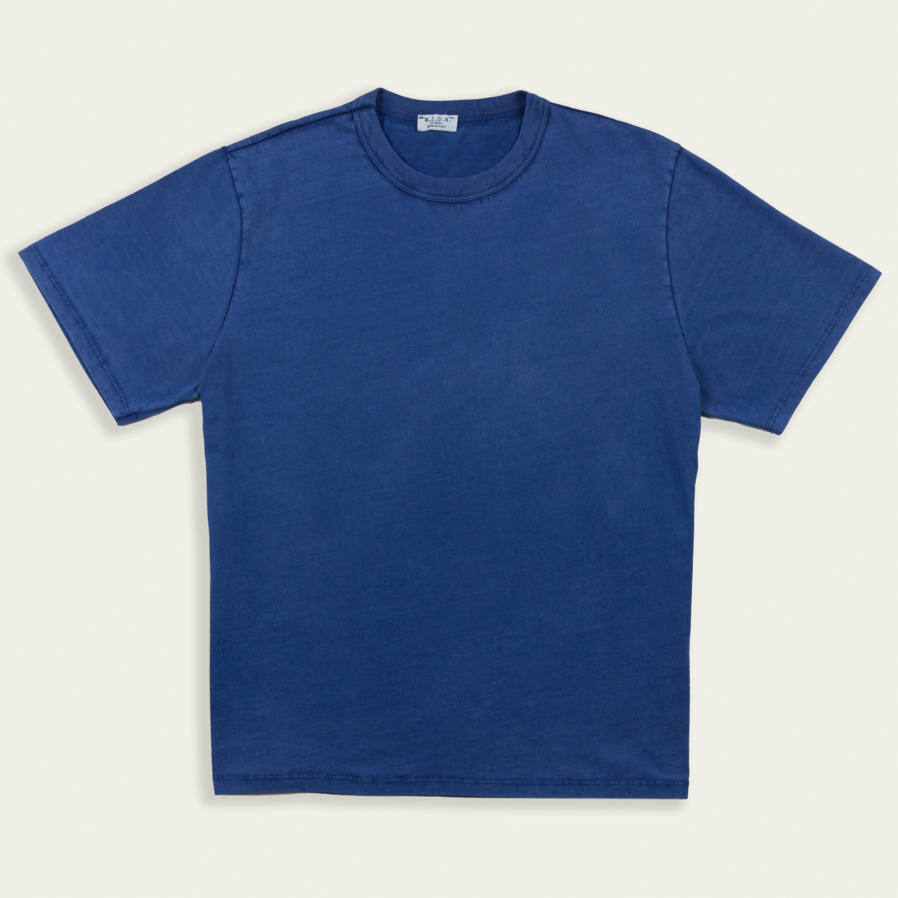
Most of our garments are garment dyed, meaning the t-shirt is fully constructed before it is dyed. This allows colour to settle naturally into the fibres, creating depth, softness and subtle variations. Because of this process, every piece is slightly unique.
We use more than 20 different dyeing and washing techniques, constantly testing and refining new approaches. Some of the most distinctive include:
- Pomgel: a bio-based treatment combined with absorbent stones, designed to work gently on the fabric. It softens and lifts colour evenly, creating muted, pastel tones with a smooth, naturally aged appearance.
- Double Dye: a two-step process combining a base dye with a reactive overdye. During stone washing, colour is removed unevenly, while seams retain more pigment — creating subtle contrasts and depth.
- Vegetable Dye: natural pigments extracted from vegetables and minerals, such as carrots or artichokes. The result is soft, organic tones with slight variations, reflecting the raw origin of the ingredients.
- Graffiato (Scratches): an abrasive treatment applied immediately after dyeing, creating irregular scratch-like contrasts. Each piece develops a unique, time-worn texture.
Developing a new colour takes time. From idea to final result, it typically takes around three weeks and multiple tests.
“A good colour should feel natural on the fabric. It should look better after ten washes than it did on day one.”
— Francesco Michelacci

Washed, measured, refined
Achieving consistency requires control. Before any treatment begins, we take a sample from each fabric lot, measure it precisely and wash it to understand how it reacts. Fabric does not shrink uniformly, so both height and width are monitored. We then adjust patterns and sizing based on these results.
After dyeing, garments go through multiple washes until the colour is fully stabilised. Only when the final rinse runs clear, with no dye release, is the process complete. This attention to detail ensures:
- reduced shrinkage
- no dye transfer
- consistent fit over time
Small batches, constant experimentation
We work in small batches not only for quality, but to keep experimenting. New ideas are constantly tested, often without thinking about trends or competitors. Some techniques evolve naturally over time, refined through practice rather than formal definition. It is an ongoing process of improvement.

Responsibility, at our scale
We believe responsibility should be practical. No single brand can change everything, but everyone can take care of what is within their reach.
For us that means producing locally, working with long-term partners, paying people fairly and designing garments that are meant to last.
We sometimes use organic or recycled cotton, but we avoid turning sustainability into a marketing tool. What matters is how things are made and how long they last.





Leave a comment